General information about Fes
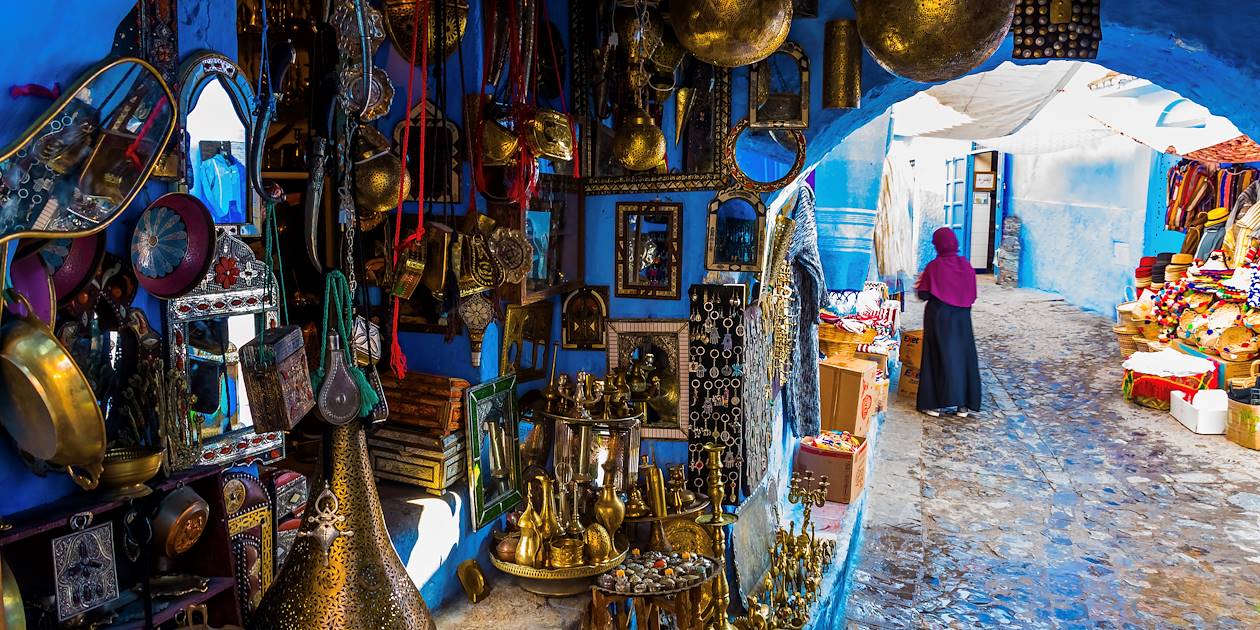
Fes, located in the heart of Morocco, is a city of remarkable historical and cultural significance. Often referred to as "the spiritual capital of the country," Fes is renowned for its architectural heritage, traditional craftsmanship, and captivating medina. Wandering through the labyrinthine streets of the old city, visitors can uncover treasures such as the renowned Al-Qarawiyyin University, founded in 859, which is considered the oldest continuously operating university in the world. Fes' bustling souks are brimming with vibrant colors, enchanting aromas, and unique handicrafts, ranging from intricately woven carpets to exquisite pottery. The city is also known for its refined gastronomy, with traditional Moroccan dishes that tantalize the taste buds. With its well-preserved medieval ambiance and impressive cultural heritage, Fes offers a complete immersion into the history and culture of Morocco.
During a visit to Fes, there are several historical and tourist landmarks that visitors should not miss. Here are some of them:
Fes Medina:
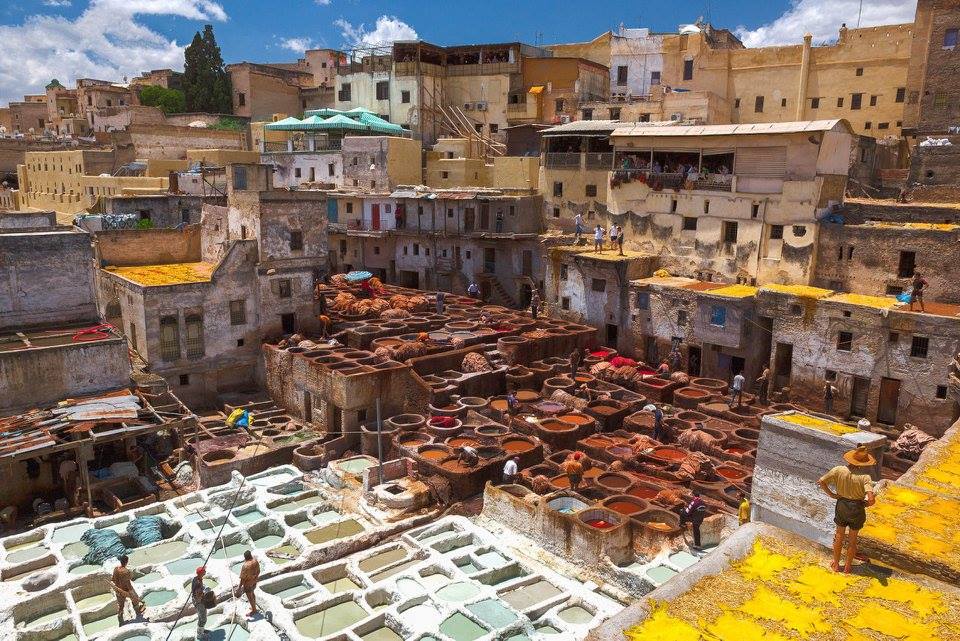
The Medina of Fez preserves, in an ancient part comprising numerous monumental buildings, the memory of the capital founded by the Idrisid dynasty between 789 and 808 A.D. The original town was comprised of two large fortified quarters separated by the Fez wadi: the banks of the Andalous and those of the Kaïrouanais. In the 11th century, the Almoravids reunited the town within a sole rampart and, under the dynasty of the Almohads (12th and 13th centuries), the original town (Fez el-bali) already grew to its present-day size. Under the Merinids (13th to 15th centuries), a new town (Fez Jedid) was founded (in 1276) to the west of the ancient one (Fez El-Bali). It contains the royal palace, the army headquarters, fortifications and residential areas. At that time, the two entities of the Medina of Fez evolve in symbiosis forming one of the largest Islamic metropolis's representing a great variety of architectural forms and urban landscapes. They include a considerable number of religious, civil and military monuments that brought about a multi-cultural society. This architecture is characterised by construction techniques and decoration developed over a period of more than ten centuries, and where local knowledge and skills are interwoven with diverse outside inspiration (Andalousian, Oriental and African). The Medina of Fez is considered as one of the most extensive and best conserved historic towns of the Arab-Muslim world. The unpaved urban space conserves the majority of its original functions and attribute. It not only represents an outstanding architectural, archaeological and urban heritage, but also transmits a life style, skills and a culture that persist and are renewed despite the diverse effects of the evolving modern societies.
Al-Qarawiyyin University
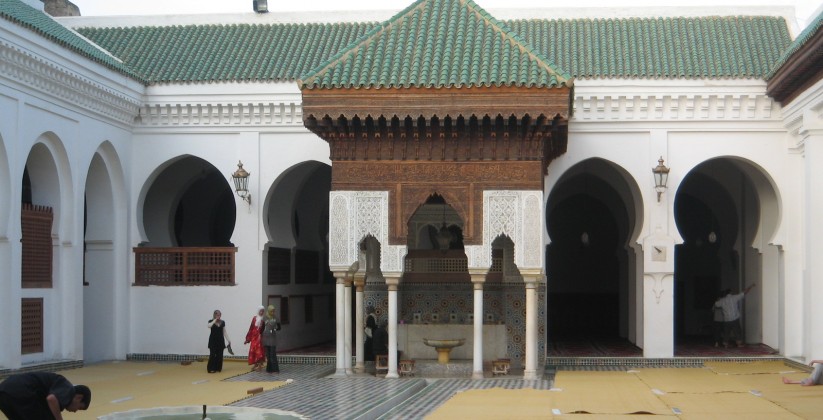
The University of al-Qarawiyyin or al-Karaouine is a university located in Fes, Morocco. The al-Qarawiyyin mosque, a religious school / college was founded by Fatima al-Fihri in 859 with an associated school, or madrasa, which subsequently became one of the leading spiritual and educational centers of the historic Muslim world. It was incorporated into Morocco’s modern state university system in 1963. It is the oldest existing, continually operating and the first degree awarding educational institution in the world according to UNESCO and Guinness World Records and is sometimes referred to as the oldest university. These claims are subject to discussions as other institutions, such as the Zaytouna mosque-school founded in 703 in Tunis, predated the founding of al-Qarawiyyin. Al-Qarawiyyin itself is named after the Qairaouan Mosque in Tunisia, the oldest mosque in the Maghreb and the cradle of the Muslim Maliki rite. Education at al-Qarawiyyin University concentrates on the Islamic religious and legal sciences with a heavy emphasis on, and particular strengths in classical Arabic grammar/linguistics and Maliki law, although a few lessons on other non-Islamic subjects such as French, English, and even IT are also offered to students. Teaching is delivered in the traditional method, in which students are seated in a semi-circle (halqa) around a sheikh, who prompts them to read sections of a particular text, asks them questions on particular points of grammar, law, or interpretation, and explains difficult points. Students from all over Morocco and Islamic West Africa attend the Qarawiyyin, although a few might come from as far afield as Muslim Central Asia.
Bou Inania Mosque and Madrasa
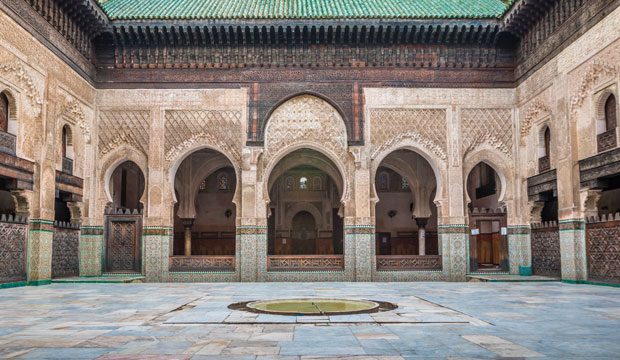
The Bou Inania Mosque and Madrasa, located in the heart of the ancient city of Fes, Morocco, is a breathtaking masterpiece of Islamic architecture and a testament to the rich cultural heritage of the region. Built in the 14th century during the reign of the Marinid dynasty, this magnificent complex was designed to serve as both a place of worship and a center for Islamic education. The mosque's exterior showcases intricate geometric patterns, ornate tilework, and intricately carved woodwork, all characteristic of traditional Moroccan craftsmanship. Its grand entrance, adorned with a beautiful horseshoe arch and elegant calligraphy, welcomes visitors into a world of unparalleled beauty and tranquility. As one steps inside the mosque, a serene atmosphere envelopes the senses. The vast courtyard, with its symmetrical arrangement of arches and columns, exudes a sense of harmony and order. The central fountain, surrounded by vibrant mosaics and delicate stucco decorations, adds a touch of serenity to the space. The mosque's prayer hall is a true marvel of architectural design. The high ceilings are adorned with exquisite cedar wood carvings and painted floral motifs, while the mihrab (prayer niche) is a masterpiece of intricate tilework and calligraphy. Soft, diffused light filters through stained glass windows, creating an ethereal ambiance that enhances the spiritual experience of worship. Adjacent to the mosque is the madrasa, a religious school where students would study Islamic theology, law, and philosophy. The madrasa features beautifully decorated student cells, a courtyard with a central pool, and a stunning prayer hall. Elaborate zellij tilework, colorful frescoes, and carved plasterwork adorn the walls, reflecting the exquisite craftsmanship and artistic mastery of the period. The Bou Inania Mosque and Madrasa stand as a testament to the enduring legacy of Islamic architecture and the intellectual pursuit of knowledge. With its awe-inspiring beauty and serene ambiance, it continues to captivate visitors from around the world, offering a glimpse into the rich history and cultural heritage of Morocco.
Moulay Idriss II Mausoleum
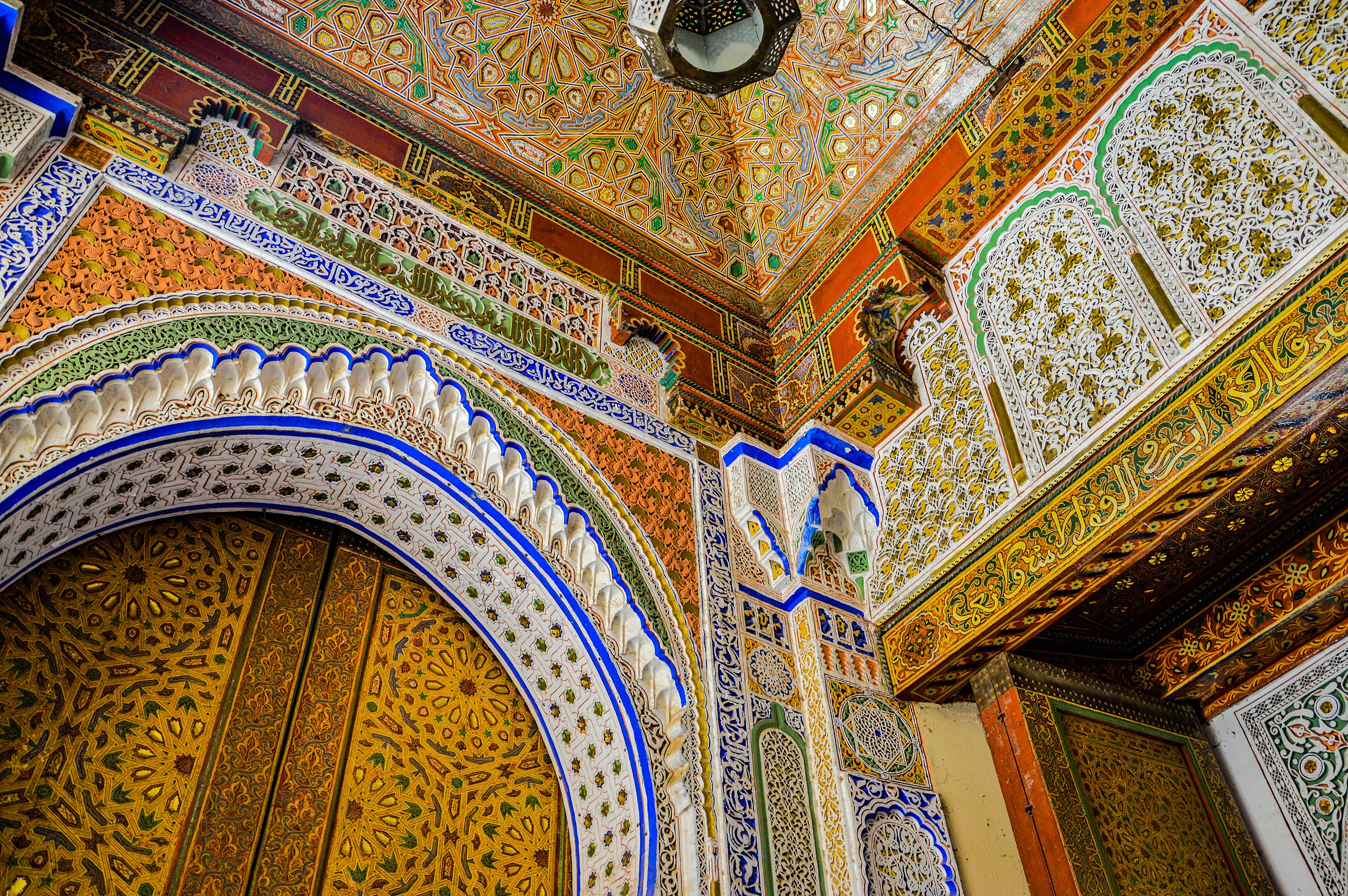
The Moulay Idriss II Mausoleum in Fes, Morocco, is a sacred site of great historical and religious significance. Named after Moulay Idriss II, the founder of the city of Fes and a revered figure in Moroccan history, the mausoleum serves as his final resting place. Situated on a hill in the heart of the medina, the mausoleum holds a special place in the hearts of the Moroccan people. It is not only a spiritual sanctuary but also a symbol of national pride and unity. Pilgrims and visitors alike are drawn to this revered site, seeking solace, blessings, and a connection to the past. The mausoleum's exterior is an architectural masterpiece, showcasing intricate geometric patterns, fine tilework, and delicate carvings. The green-tiled roof stands out against the blue sky, a distinct symbol of Islam and a representation of paradise. Upon entering the mausoleum, visitors are greeted with a serene and reverent atmosphere. The walls are adorned with ornate calligraphy, depicting verses from the Quran and honoring the life and legacy of Moulay Idriss II. Soft lighting casts a gentle glow on the tomb, creating an atmosphere of contemplation and spirituality. Devotees come to pay their respects and offer prayers at the tomb of Moulay Idriss II, believing that he holds a special place in the realm of spirituality and intercession. The mausoleum is a place of pilgrimage, drawing crowds during religious festivals and important dates in Moroccan history. Surrounding the mausoleum, the narrow streets of the medina wind their way through the vibrant city, offering glimpses into everyday Moroccan life. The sounds of the call to prayer, the aromas of local spices, and the bustling markets add to the sensory tapestry that makes Fes a captivating and immersive destination. The Moulay Idriss II Mausoleum is not only a testament to the rich cultural and religious heritage of Morocco but also a symbol of the enduring legacy of Moulay Idriss II. It stands as a place of spiritual significance, attracting visitors who seek both historical knowledge and a deeper connection with Moroccan traditions.
" Jnan Sbil Gardens"
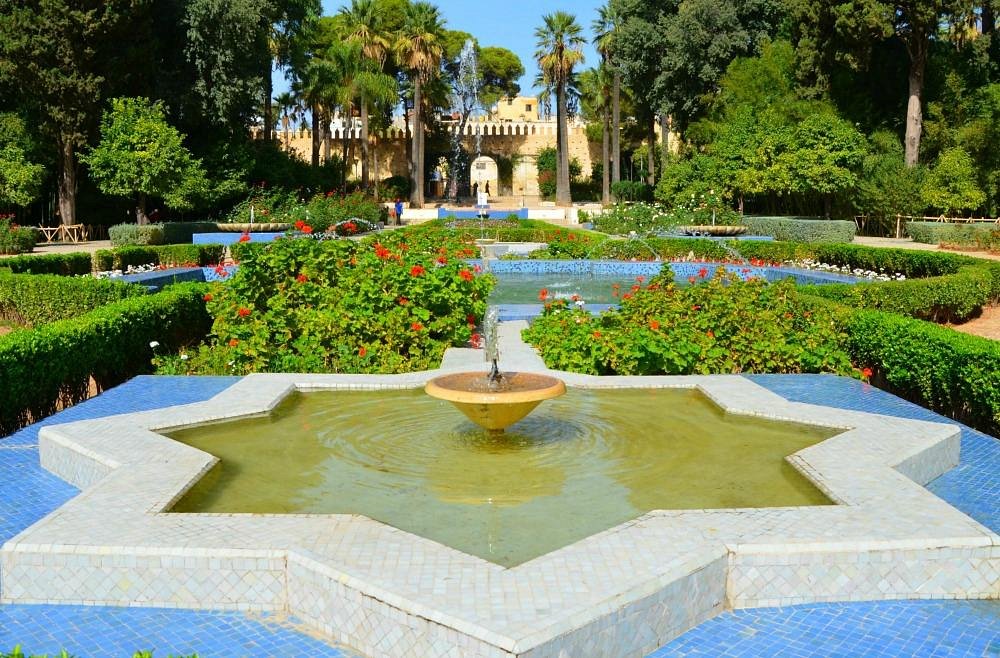
Nestled in the heart of the ancient city of Fes, Morocco, the Jnan Sbil Gardens is a verdant oasis that offers respite from the bustling streets and a serene escape into nature. Dating back to the 18th century, these historic gardens have long been cherished as a place of tranquility and beauty. As you enter the Jnan Sbil Gardens, you are greeted by a symphony of colors and fragrances. Lush green lawns, vibrant flowerbeds, and towering palm trees create a picturesque landscape that is both soothing to the eyes and invigorating to the soul. The gardens are meticulously maintained, with neatly trimmed hedges and winding pathways that lead you deeper into their enchanting embrace. The centerpiece of the Jnan Sbil Gardens is a serene lake, where shimmering waters reflect the surrounding greenery. A charming wooden bridge stretches across the water, inviting visitors to take leisurely strolls and enjoy the tranquil ambiance. Benches and shaded areas are strategically placed, offering peaceful spots for relaxation and contemplation. The gardens are a haven for plant enthusiasts, boasting a diverse collection of flora from around the world. Fragrant roses, blooming jasmine, and exotic tropical plants create a sensory feast, filling the air with their delightful scents. As you explore further, you may encounter ancient olive trees, citrus groves, and an array of colorful blossoms that change with the seasons. The Jnan Sbil Gardens also serve as a cultural gathering place, hosting various events and exhibitions throughout the year. From music festivals to art installations, the gardens come alive with creativity, bringing together locals and tourists to celebrate the vibrant culture of Fes. Beyond their aesthetic appeal, the Jnan Sbil Gardens hold historical significance. They were originally designed as a royal garden during the reign of Sultan Moulay Hassan I and were later opened to the public, becoming a beloved destination for both locals and visitors. Whether you seek a moment of tranquility, a place to connect with nature, or a serene setting for a leisurely stroll, the Jnan Sbil Gardens in Fes offer a serene and captivating experience. Amidst the bustling city, they provide a sanctuary of peace and natural beauty, inviting you to immerse yourself in their timeless charm.